 Eterno Dia Photography
StayCation Alberta: Alberta’s northernmost Badlands
Posted on July 26, 2023
It’s been a hot minute since I sat down to officially share thoughts and photos about my travels. Day jobs and living life certainly get in the way of documenting the things. I recently got to take an amazing day trip, courtesy of my husband as a birthday gift, and it really should be shared, so here I am.
When my husband asked what I wanted for my birthday this year, I couldn’t think of much in terms of actual physical gifts, so I asked for a day trip. I’d been reminiscing about a day trip we did last year to Hard Luck Canyon near Whitecourt. I originally found that trip on someone’s blog (which I’ve unfortunately lost track of), and it suggested a few other stops along the way, including Rocky Mountain Big Horn Distillery, to turn it into a day trip, and I had it in my mind to try the same type of trip, but head to a different location. I made this day trip request a bit challenging by asking for it to be multifaceted; I asked for part of the trip to include a historical stop that we might be able to metal detect at (a hobby I took up during the pandemic), possibly include some antiquing (I also became an old, old woman during the pandemic) some sort of hike (we all need to get out and be in nature), and maybe visit a local brewery (because beer is awesome). A final challenge to this request is that it had to be close enough to Edmonton, where we live, that we could leave in the morning after giving our senior, diabetic dog, her morning dose of insulin and be back in time to give her her suppertime dose.

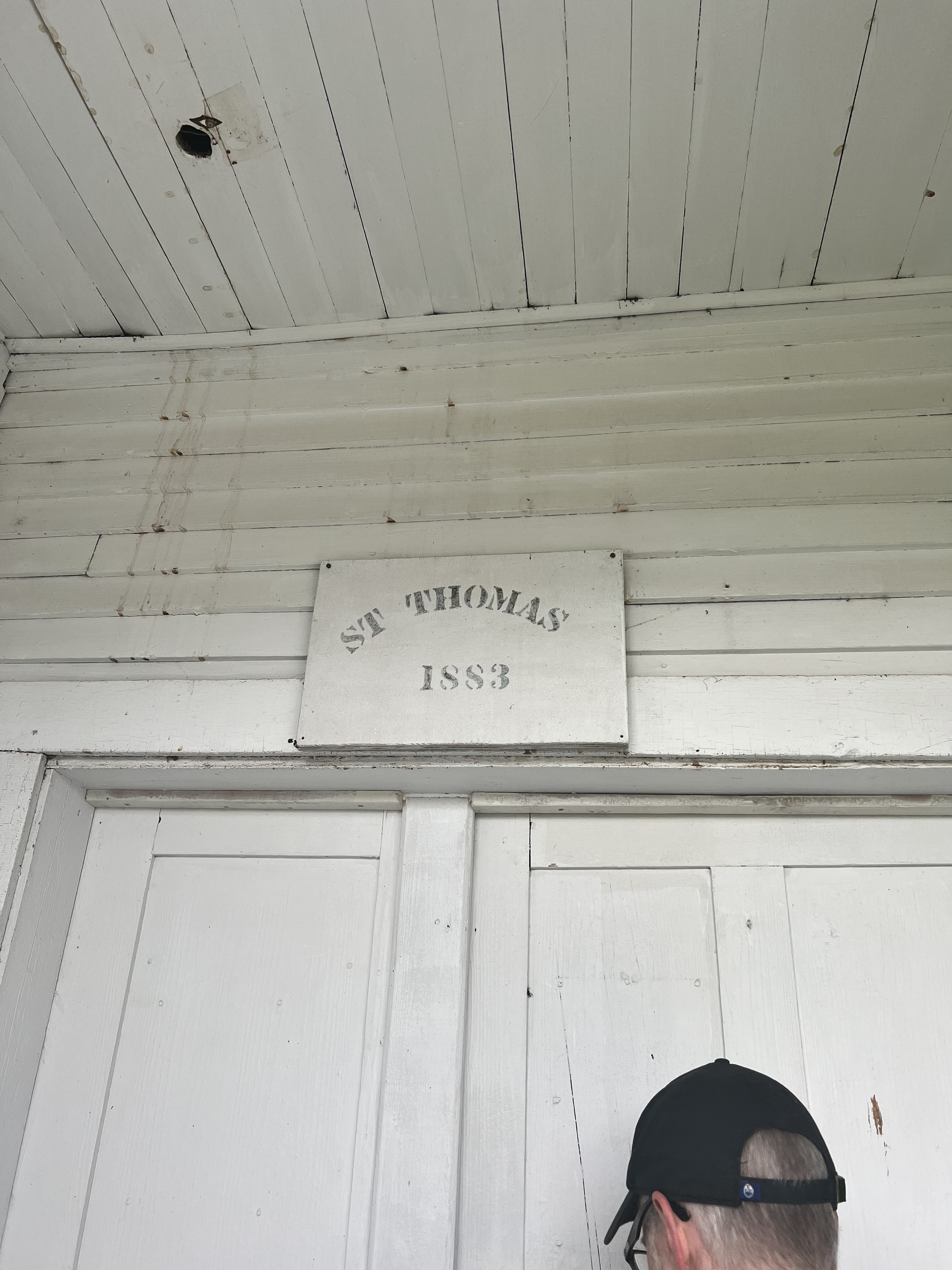
Our first destination (“History”) was in the tiny hamlet of Duhamel. It was here that we stopped at St. Thomas Catholic Church, a historic Metis church dating back to 1883. We were surprised to find the church doors open and we were able to look around at the interior and some of the artifacts on display.


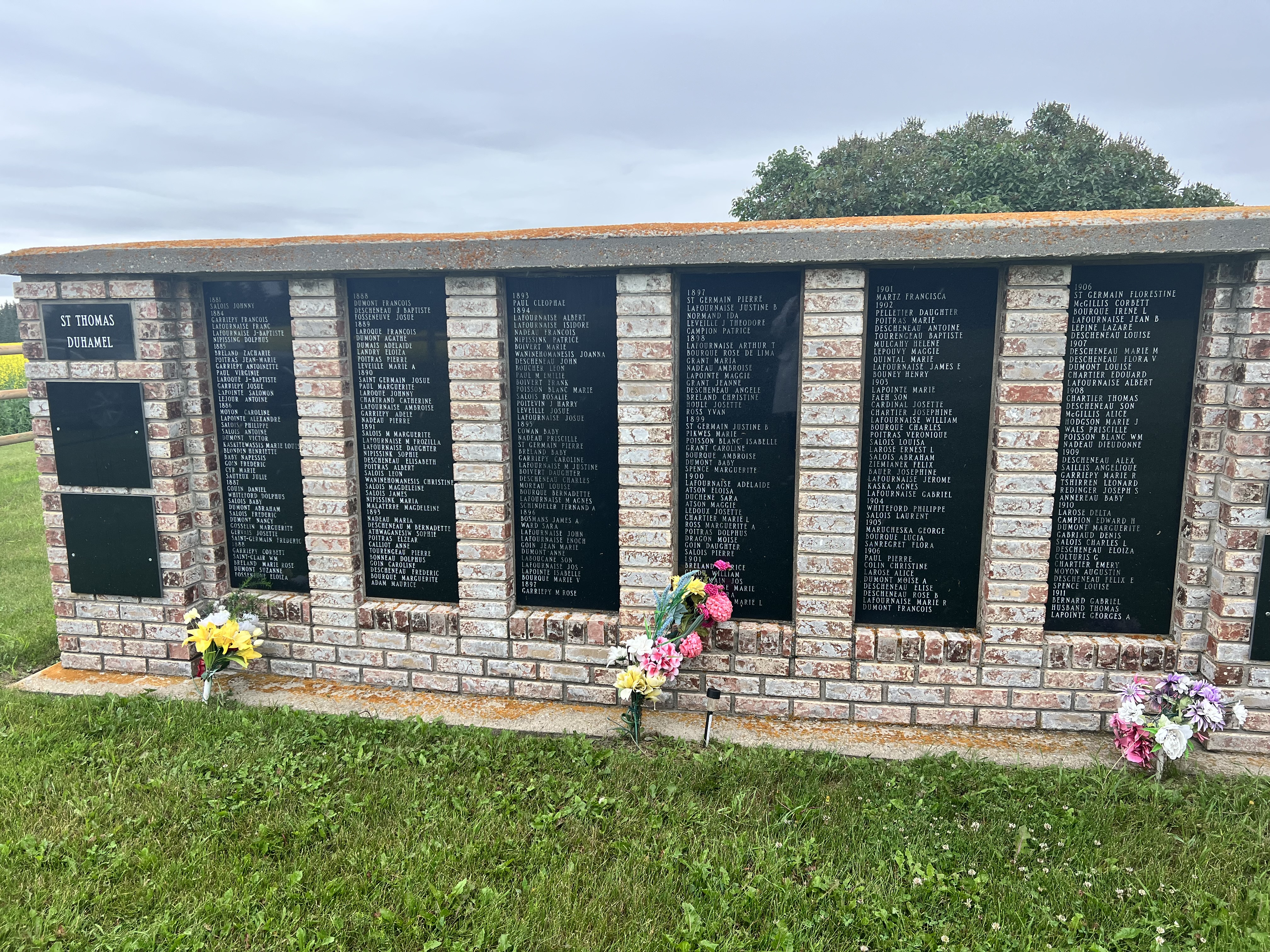
Up the road a short drive we found the church’s cemetery, with graves- some unmarked, dating back to the 1880s. This cemetery is the burial site of First Nations, Metis and early European settlers to the area.


After we explored the area, we headed to another part of the Duhamel area that was known to have early settlers and structures and did a bit of rainy metal detecting. We didn’t do much, as the day was rainy and the digging was muddy, but after a few bottle caps, nails and a drill bit, we did find a fancy old spike, that we think has some age, due to how far down it was buried.


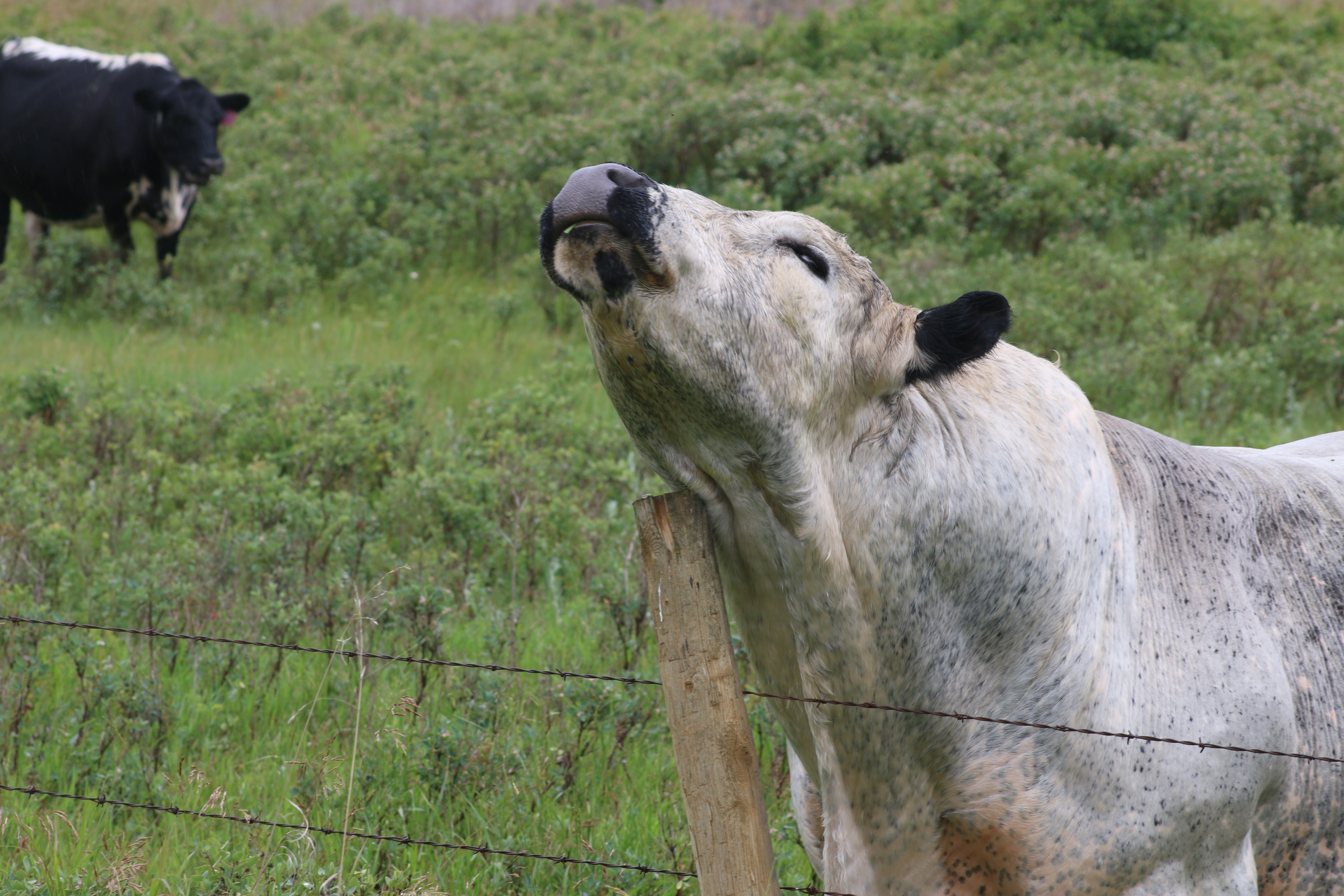
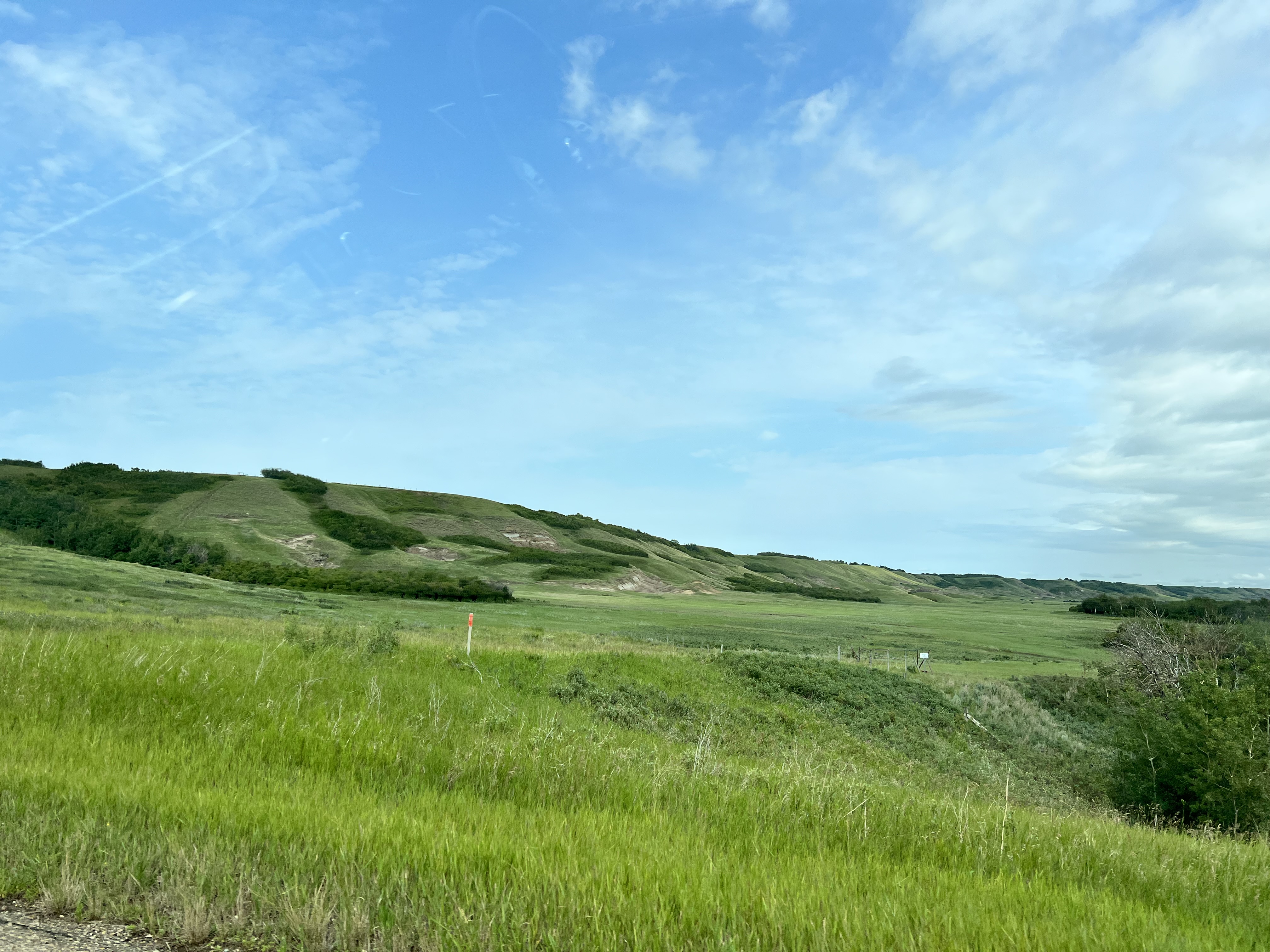
After the digging and history lesson, we were ready for lunch, so my husband drove us to the next stop of the day: Donalda. I was aware Donalda existed, but I hadn’t yet had a reason to visit. This little village is particularly special, as it overlooks the Meeting Creek Coulee, which is the most northerly point of the Canadian Badlands (this is where the hike and nature portion will come in later). We initially drove around the area to take in some of the beautiful landscapes. We took some photos and chatted with some local cows before we headed into town to get lunch at the Coulee Tea House, an adorable café and restaurant in an old mechanic shop, with the most amazing selection of tea. We had a pot of tea, soup and sandwiches, and then did some shopping at the attached antique shop (yay! antiquing!) and local artisan market.



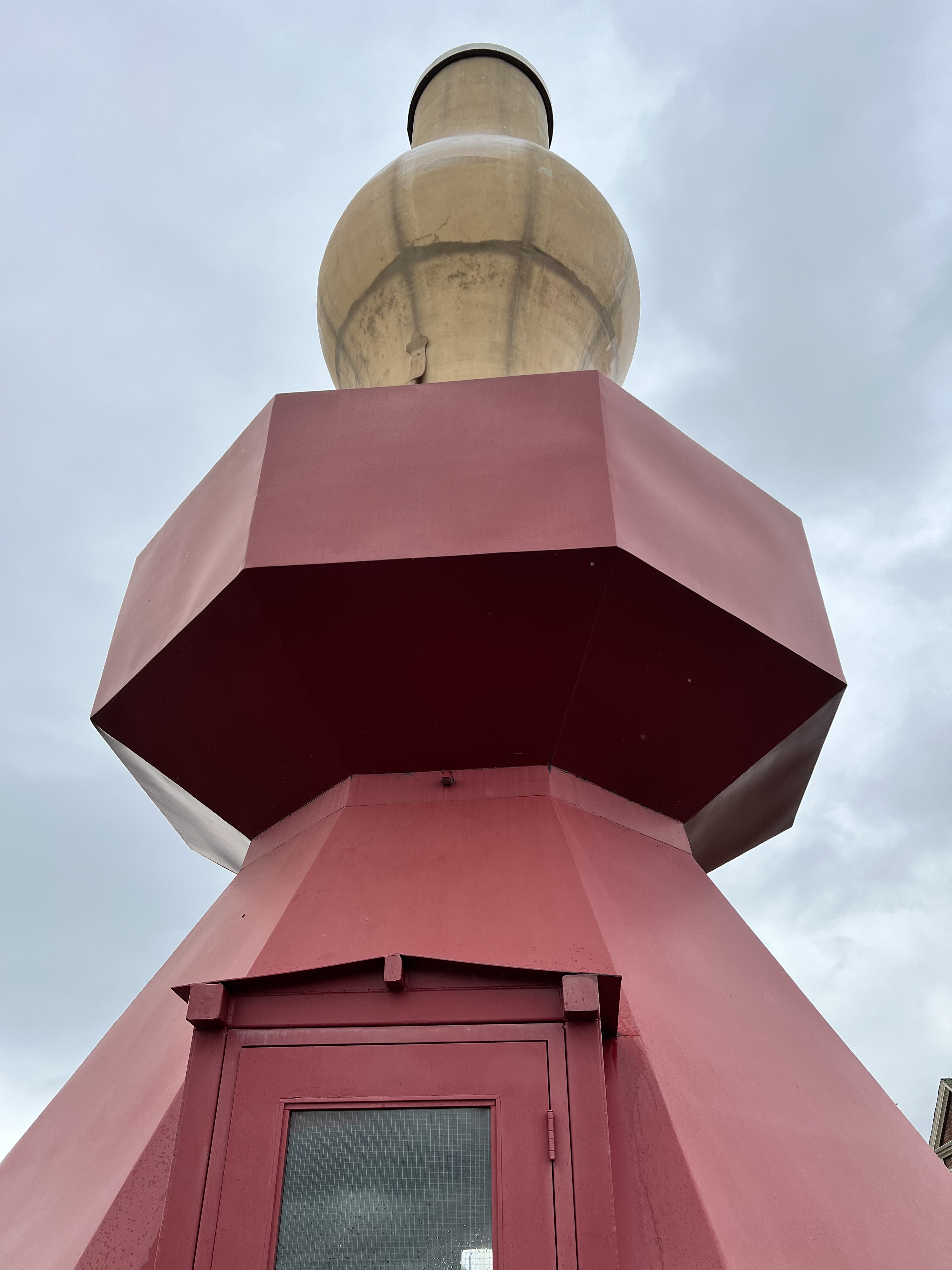
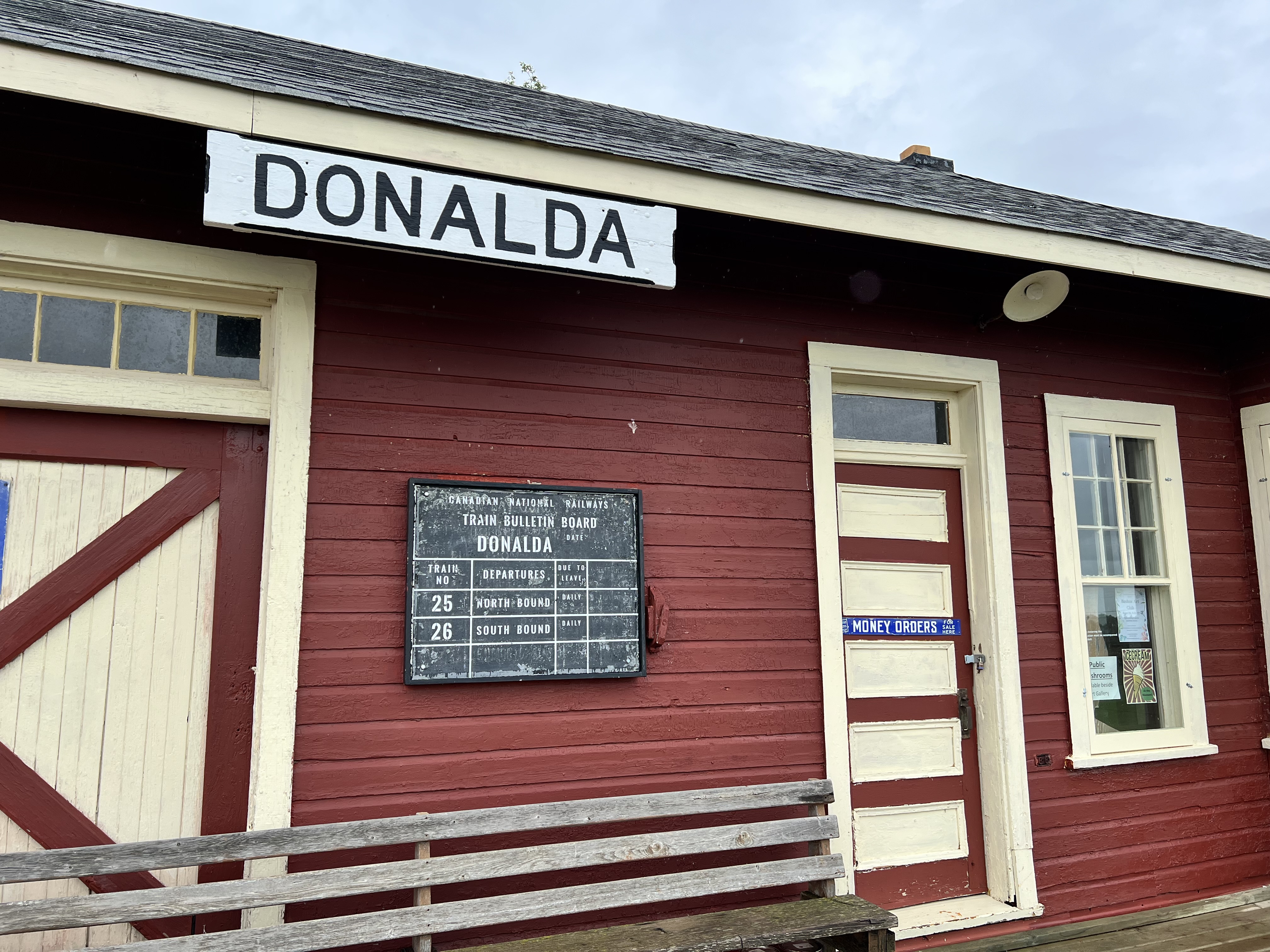
The thing that can’t be missed during a trip to Donalda, is the giant oil lamp on the edge of town. It can’t be missed, because it’s literally massive. From the village’s website: “Donalda has the largest oil lamp replica in the world. At 42 feet in height, it overlooks the coulee and lights up all night, every night. The Village Office across the street houses The Lamp Museum with the world’s largest oil lamp collection, numbering over 1000 lamps along with many local artifacts.” There’s a little walking area where the lamp is located, as well as the old railroad station, so after lunch, we headed there for selfies. I love lamp.

At the railroad station, you’ll find the signs posted for the Willow Canyon Hiking Trail. This trail (as per the sign) “leads to 129 acres of badlands offering fabulous sight-seeing from the top of the coulee rim to the bottom of the valley”. We strapped on our hiking boots and slathered on the bug spray and headed out to see the landscape up close.


We had a lovely 3.75km round trip hike, through forest, meadows, farmland and cow pastures that took us down to the bottom of the valley, where one could see what might be considered “baby” hoodoos. The hike is decently challenging, as it follows a lot of cow trails that were quite muddy from a lot of recent rain the area has had. While it was also pretty fun to hike along through the cow country, it should always be noted to make sure to never get between a mama cow and her baby cow. Even though the cows were generally avoidant of or indifferent to us humans, never make a mama of any species worry about her baby. In some cases, we had to hike through a bit of brush and avoid the main trail to give the cows a bit of space. The other thing to be aware of on this hike is the sheer amount of cow poop on the trails. But really, if you come back from a hike with clean hiking boots, did you really have an adventure?


I should add here as well that if you’re a birder (guilty) this is also a great area to find a good selection of birds, including American Goldfinches, the Wilson’s Snipe, Flycatchers, Vireos, Common Yellowthroats, and a variety of sparrows and Spotted Towhees.

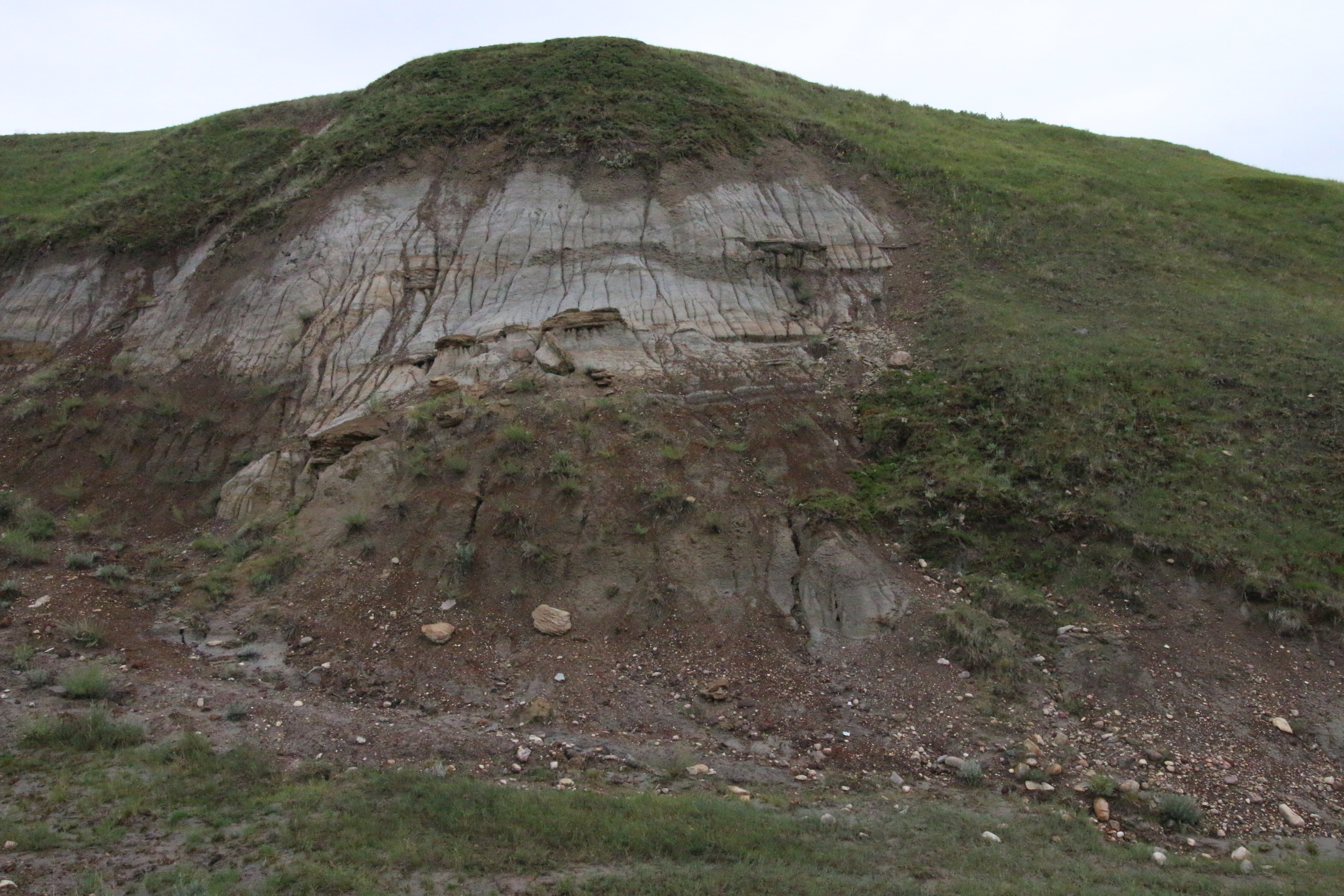
The rain finally stopped and the day cleared up nicely during our hike. The area really is exceptionably beautiful. We were struck by the fact that the entire hike, we were the only two out there, so if you’re looking for a quiet hike filled with solitude – this one is for you.


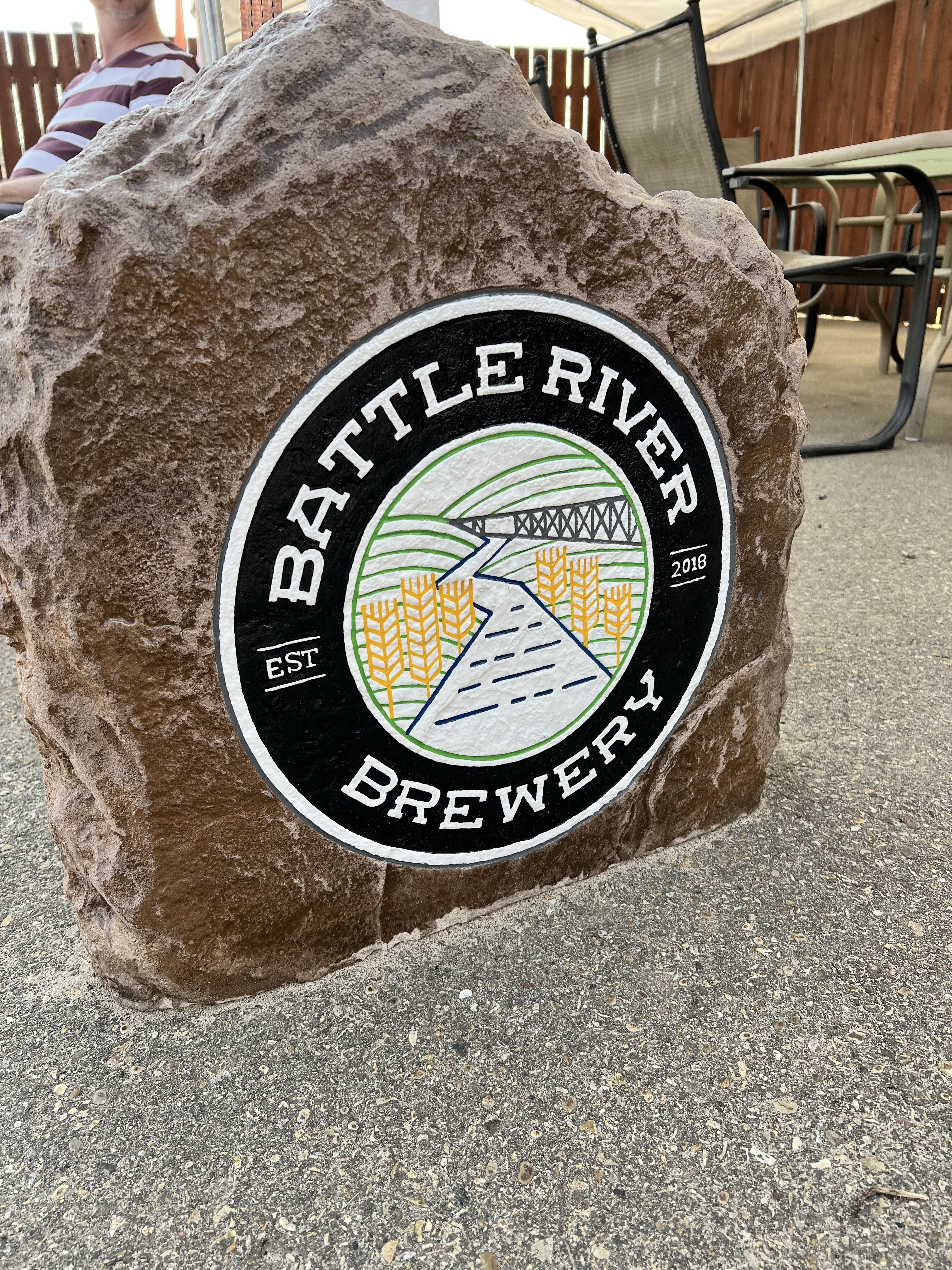
Once we had our fill of hiking and nature and made it back to the car, our final destination, to celebrate successful physical exertion, was a local brewery. A 45 minute drive from Donalda had us at Battle River Brewery in Camrose. The brewery has a small tasting room and casual patio in town. After a few local beers and some chicken wings, we headed back to the city to tend to the elderly, diabetic dog.

I have to hand it to my husband for planning a very challenging request. We packed in a ton of activities into a single day trip, getting some local history, supporting some small town business, and getting in some good exercise in while getting out into nature. I highly recommend doing this trip if you’re looking for a quick getaway this summer. Feel free to get in touch if you have other suggestions for central Alberta daytrips as well.

Until next time, keep those hiking boots dirty.
L
Staycation Alberta : Lady Aurora
Posted on November 7, 2021
This past week, I was lucky enough I didn’t even have to leave my neighborhood to find something that people sometimes travel thousands of miles in an attempt to find and often never get to see: The Northern Lights. Aurora Borealis.

In northern Alberta, we’re more likely to see these magical magnetic solar winds than a lot of other places in the world, but often, it’s still luck. Finding aroura means paying attention to solar storms, staying up very late, usually in the fall or winter and often requires driving to a dark sky area in order to actually see and capture this magical phenomenon.


Last week we had some help from our local star in the way of some great solar flares and storms. The incoming storm was supposed to hit on the previous Saturday, and I was prepped and ready to go; camera ready, batteries charged, dark sky area chosen, but alas – the lady doesn’t always co-operate and no lights came out.
On Wednesday night, things were looking better, but the sky began to cloud over. It was a work night for me, and I’m not the type that can (safely) pull an all-nighter any more, so I went to bed. I happened to wake up at 4am (my new, annoying, middle-aged, trick) and stepped outside in the crisp autumn night, just to see if anything was going on, and as luck would have it, the aurora were there flickering above my head.

If you’ve never had the honor of seeing the Aurora, they really are simply stunning. They’re never the same; sometimes they slowly make curtain-like waves in the distance or overhead. Sometimes they flicker like they’re being turned off and on. Sometimes they’re soft and flowing and sometimes they move so fast and geometrically that they’re like laser lights in a club. They range in color from white, green, purple and pink. No matter how the Northern Lights appear, they’re mesmerizing and fantastic to watch. I’m never not awed when I see them.

I captured these from my back field. It’s not an ideal photography location. I live in a city of a million. The closest dark sky preserve is a 45 minute drive away. My neighborhood is very bright with a seniors home and school nearby that keep their lights on 24/7. To be able to see these lights from my field was spectacular. I knew if I’d headed out to a dark sky the photos would be spectacular, but I look my stroke of luck for what it was and snapped these photos in my pajamas from 4-5 am.
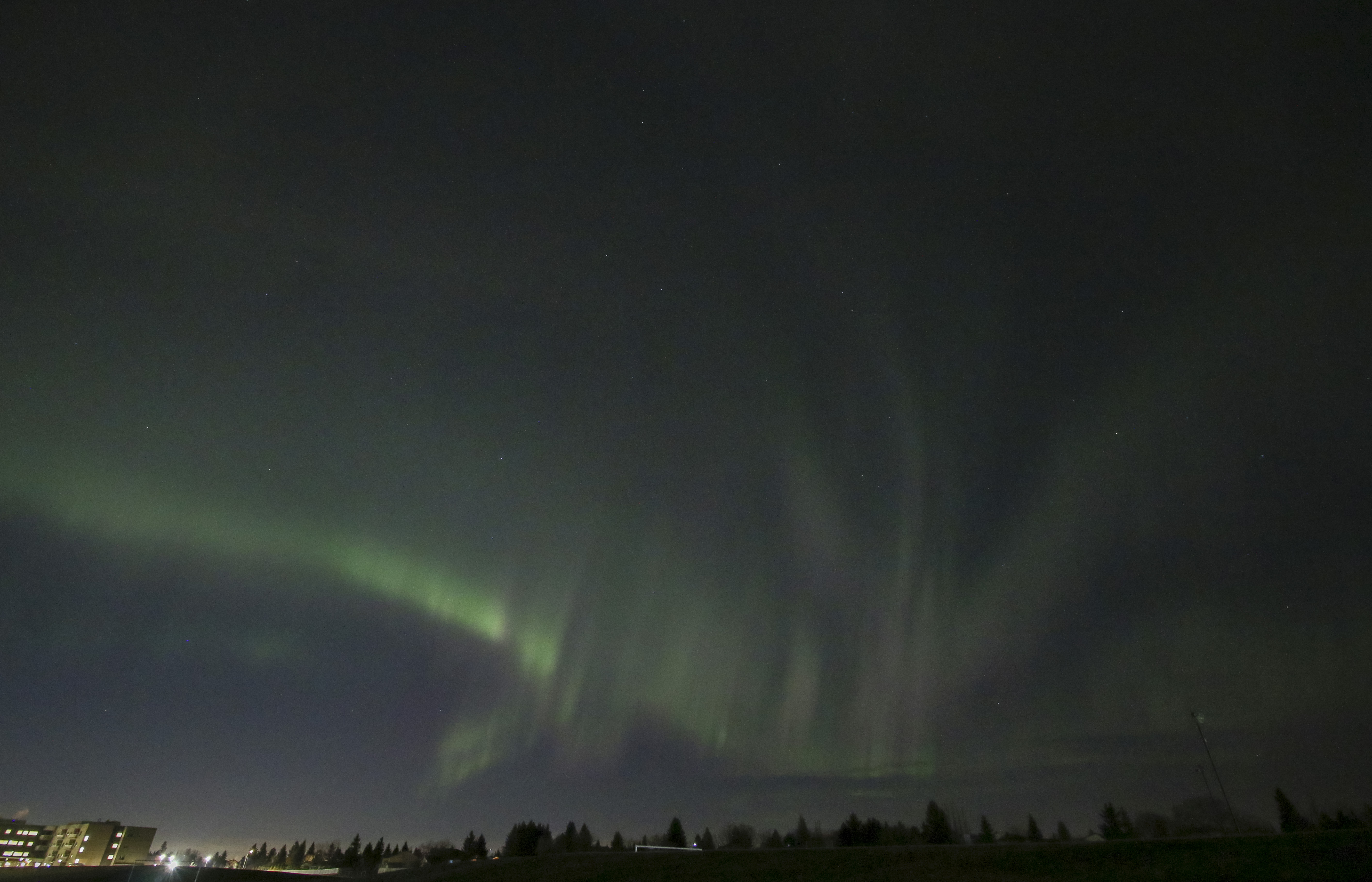
Many cultures and peoples including Canada’s First Nations people have deep spiritual connections with the Aurora and have legends and stories involving the phenomenon. Watching these lights, it’s easy to feel a magical connection to the earth and universe.

Lots of travelers make long, expensive, journeys to try to find these mysterious and magical lights. I feel very lucky to have captured these photos from my own backyard. Sometimes, you don’t even need to travel to find magic and beauty right where you are.

Thanks for stopping by. Until next time, safe and happy travels (when and if you can resume).
-L
Staycation Alberta: On the hunt for the Mysterious Mountain Bluebird
Posted on July 8, 2021
I’ll admit it – I’m officially a birder. I go to great effort to keep my backyard birds happy with a fountain, bird bath and a varied selection of seed and suet. Whenever I go out on a hike or find myself outdoors, I’m always interested in the birds I see. One of my greatest joys is just sitting outside and watching and listening to the birds.

A few weeks ago, I stumbled upon a place called Ellis Bird Farm, not far from Blackfalds, Alberta. They came up in my facebook feed advertising bluebird tours. First things first – I didn’t know that we had bluebirds of any kind in Alberta. Secondly, I’d never hear of Ellis Bird Farm, but I was intrigued enough to immediately sign up for the free tour advertised.


Ellis Bird Farm began in 1982 to carry on the legacy of Charlie and Winnie Ellis, conservationists who originally owned the farm. The Ellis’ at the time operated one of the largest bluebird trails in Canada. The farm today is a haven for birds of all kinds, as well as rabbits, ground squirrels, beavers and many other types of wildlife. It also serves as a research centre for mountain bluebirds and other bird species.

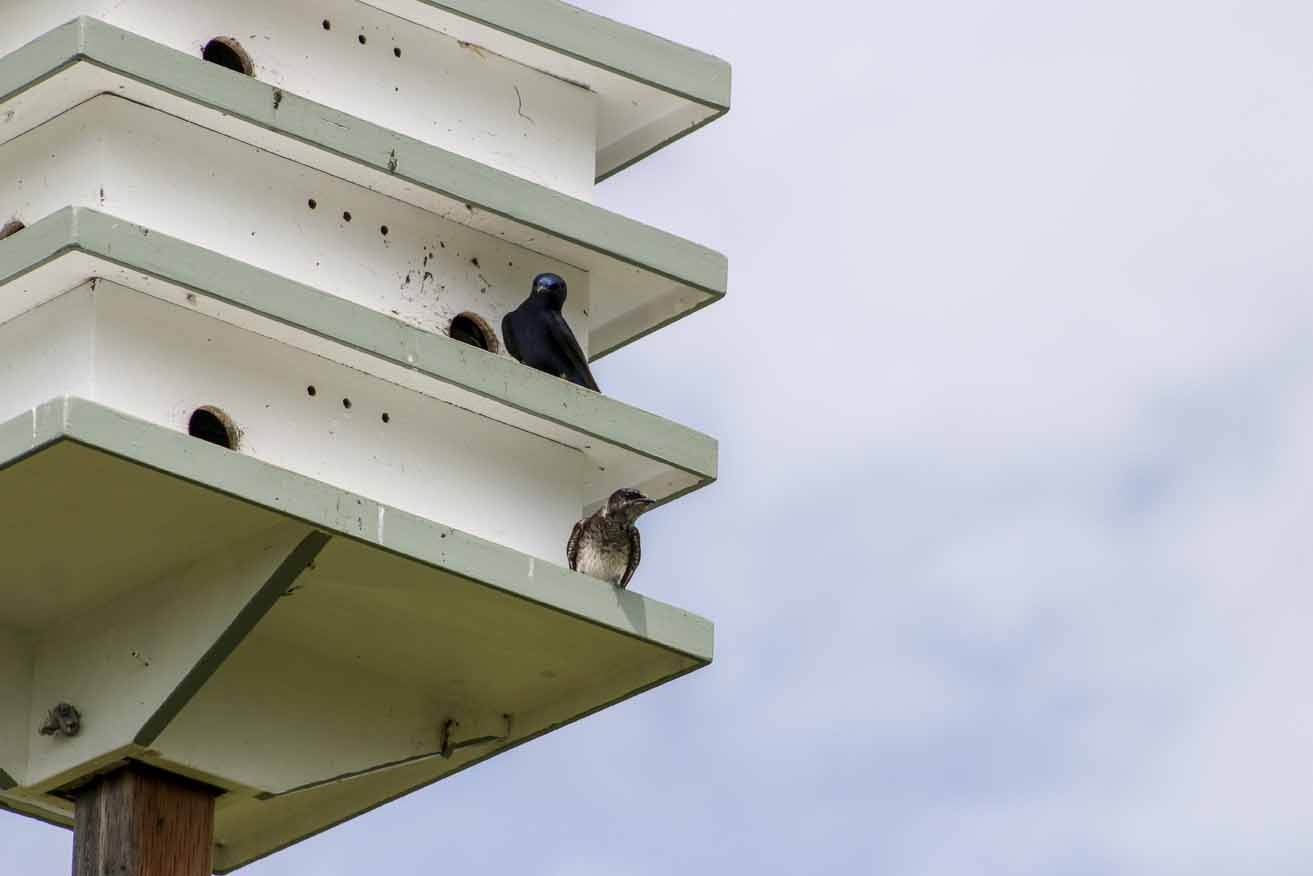
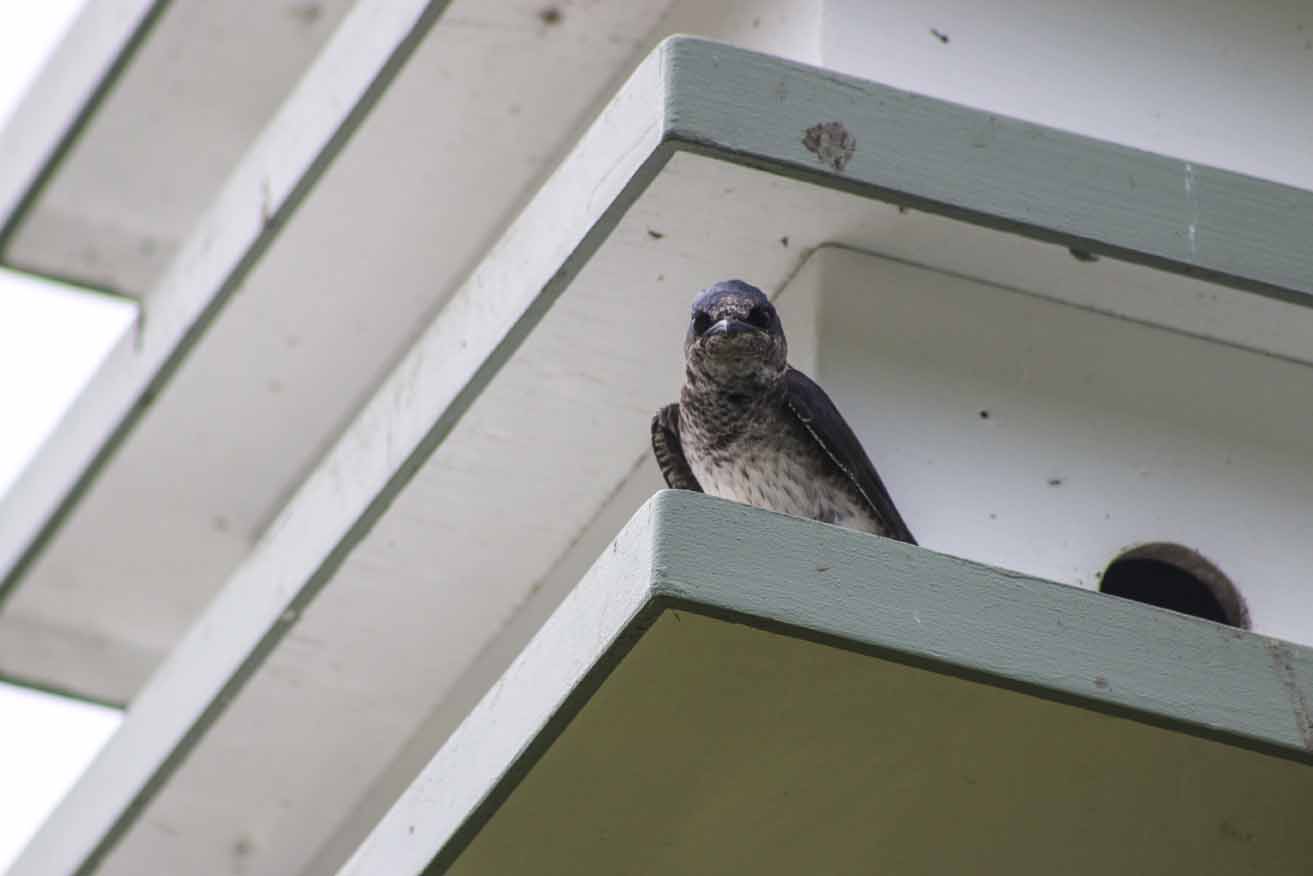


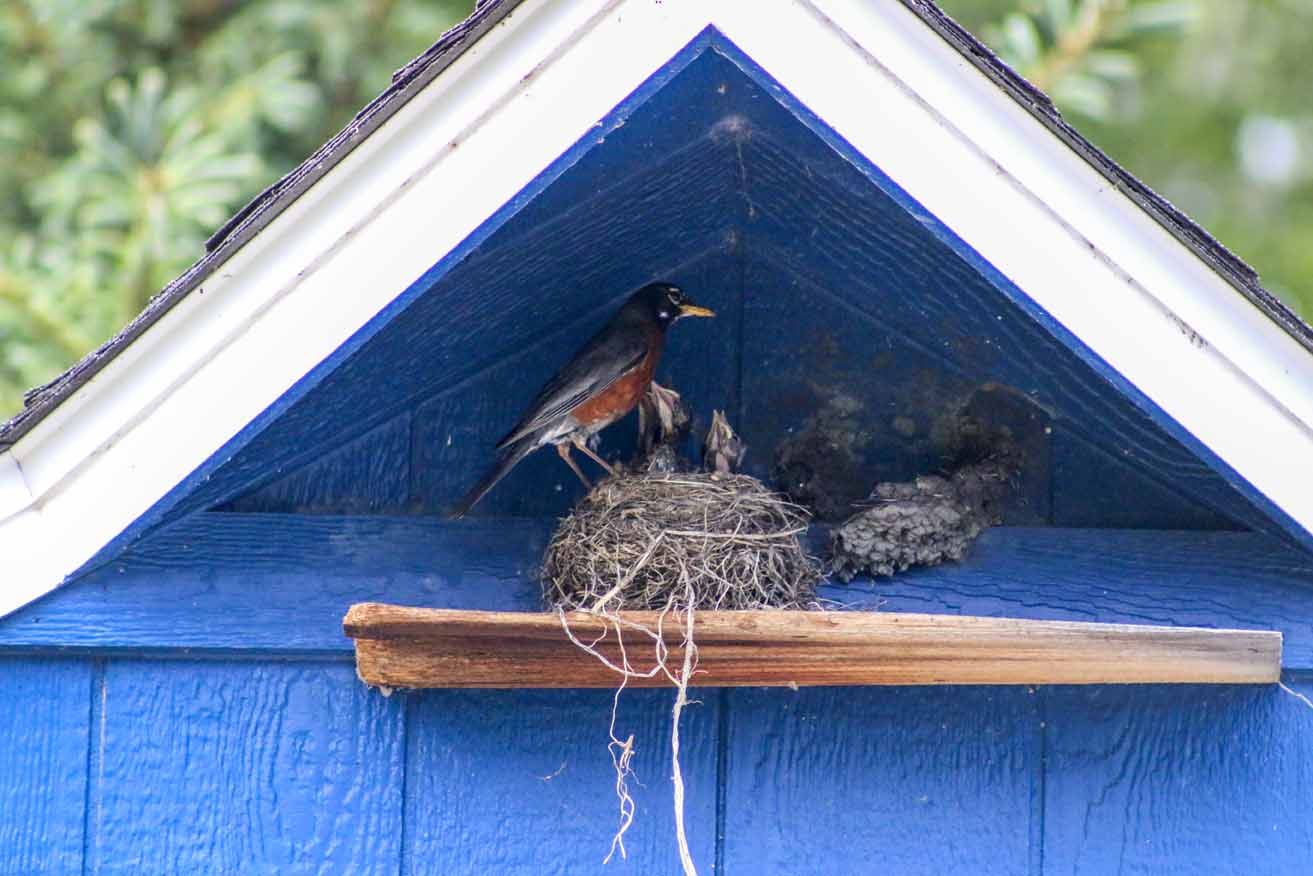
I arrived for our guided Bluebird tour provided by Lucas, one of the researchers working at the farm. I knew nothing about bluebirds; I’d never seen one and thought they were a species that only lived further south or east than Alberta. The mountain bluebird is a small migratory thrush with the males being a vivid blue color and females a much less impressive shade of grey with a bit of blue on the wings. Their range is actually quite expansive, migrating down to Mexico in the winter and as far as Alaska for breeding in the spring and summer.
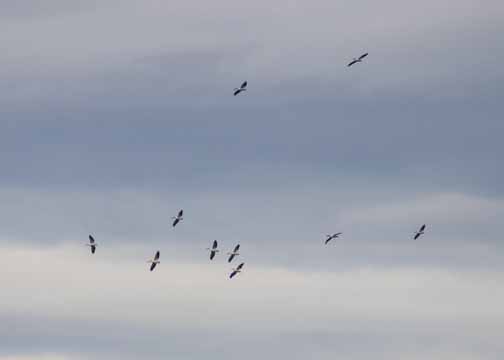
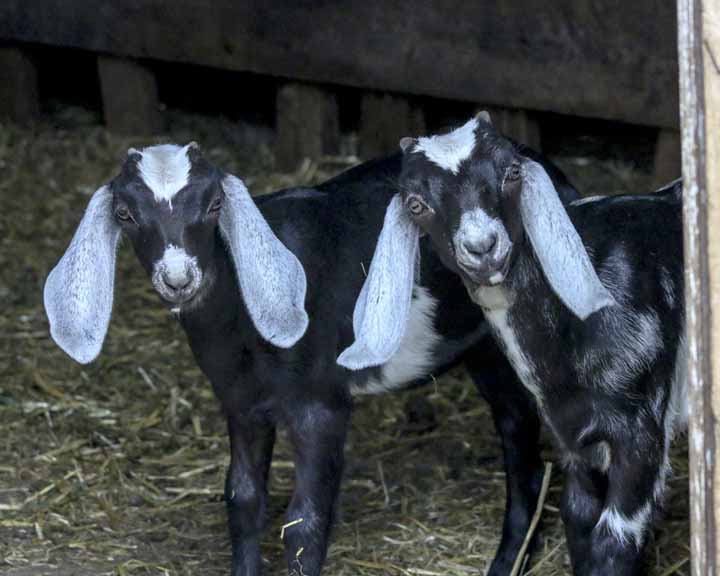

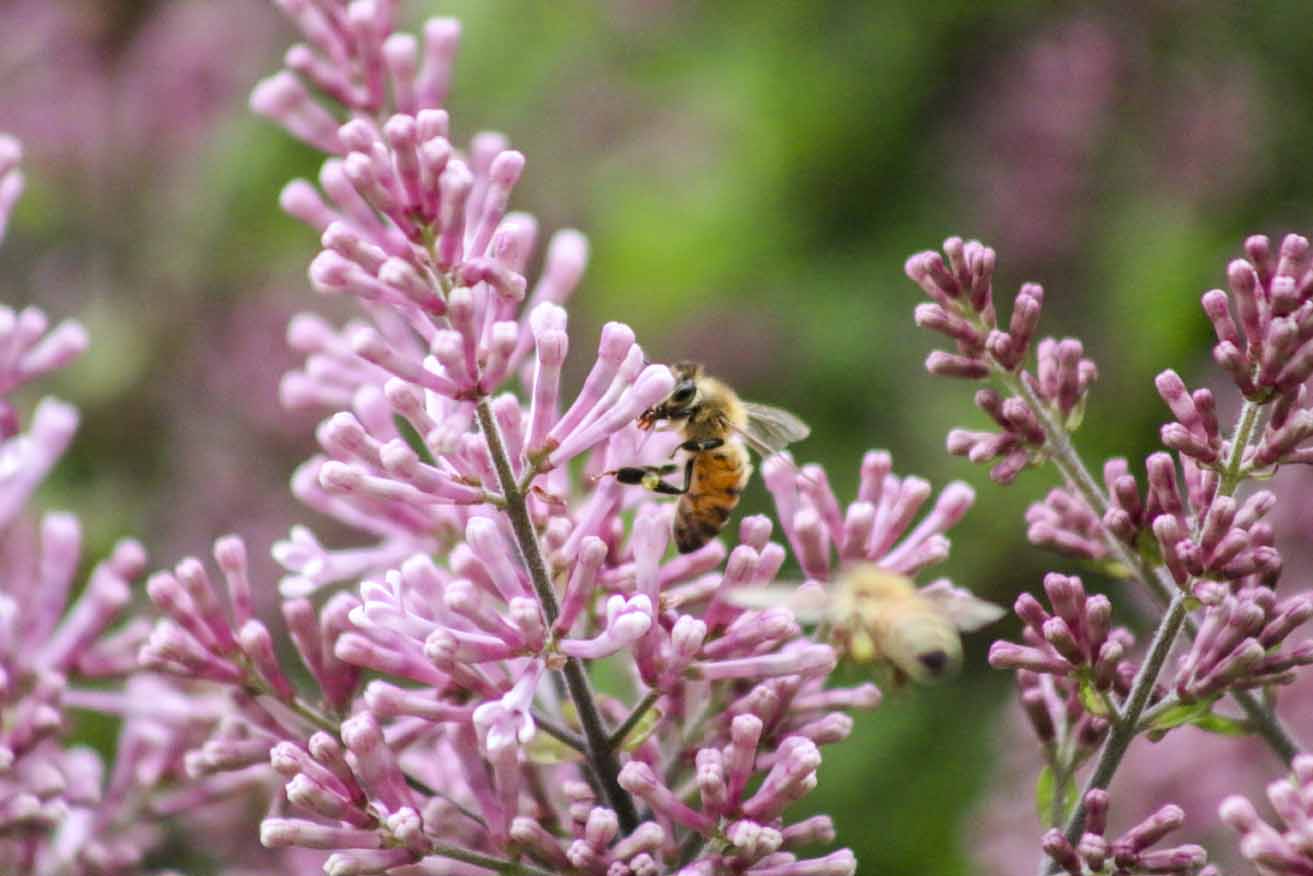
Many mountain bluebirds will nest in nest boxes, of which Ellis Farm has set up all over central Alberta. Researchers check these boxes and record data about population and breeding. Unfortunately, as was explained by Lucas, the number of bluebirds that came to Alberta this year, was significantly less than normal, possibly due to the bad storms Texas had earlier in the year.

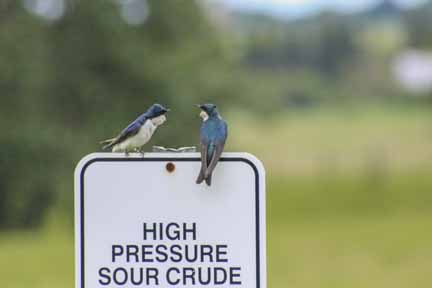

Just because we were on a bluebird tour, I wasn’t confident we’d actually see any; nature can be fickle, and I’m a bit cynical when it comes to promised wildlife experiences. Either way, I was excited to get my bird nerd on and learn about a new type I’d never seen before.
Lucas took us out on one of the trails to a nest box where he said if we just waited patiently, the male and female mountain bluebird would show up shortly to feed the nestlings he knew were in the box. Just like clockwork, dad, and then mom showed up to feed the babies! They are absolutely beautiful birds who aren’t overly shy of human activity so they made excellent photography subjects. The tour took us to two other nest box sites a few kilometers down the road from the farm with more of the promised birds.

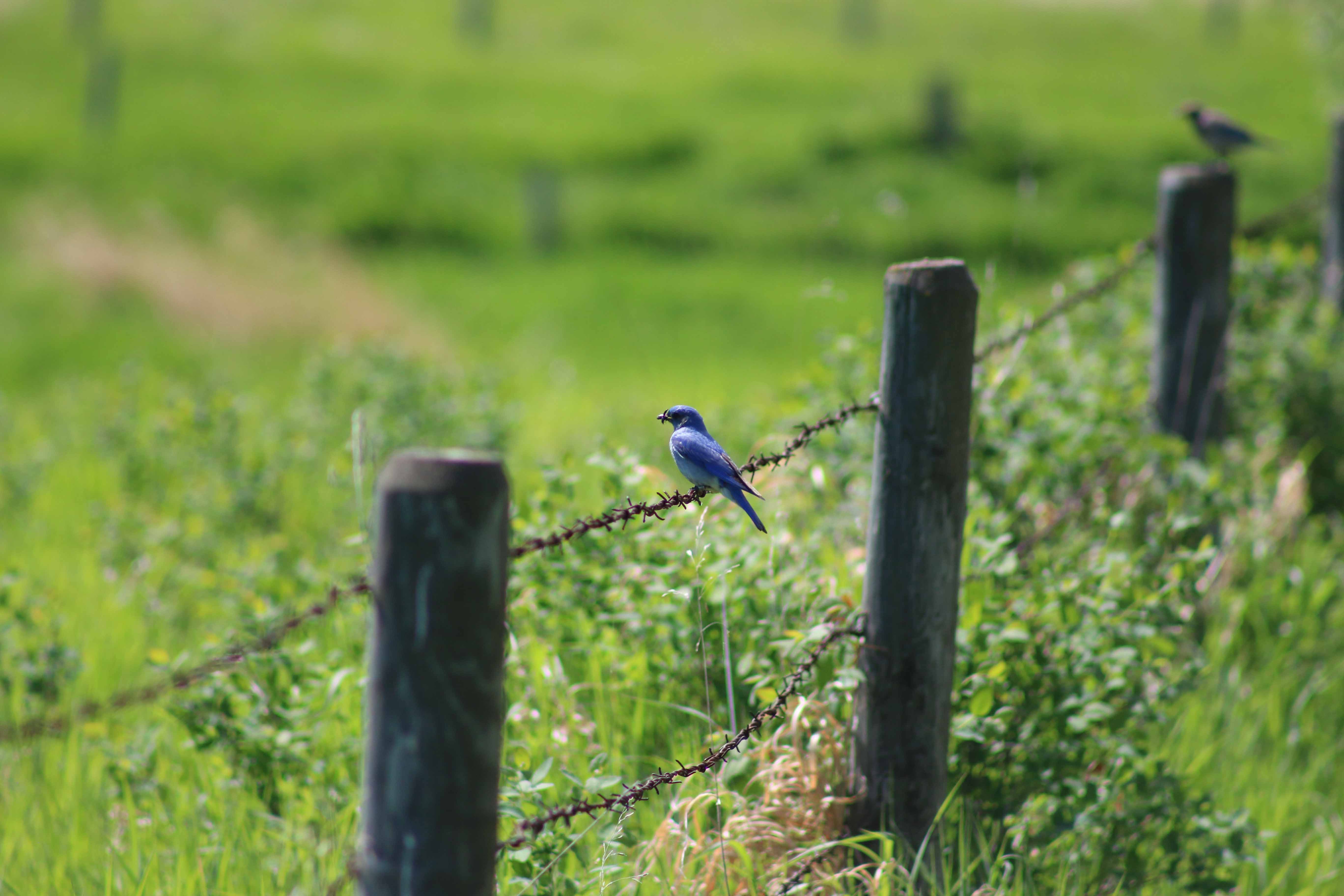

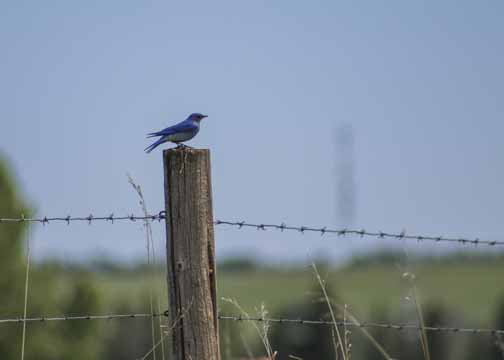

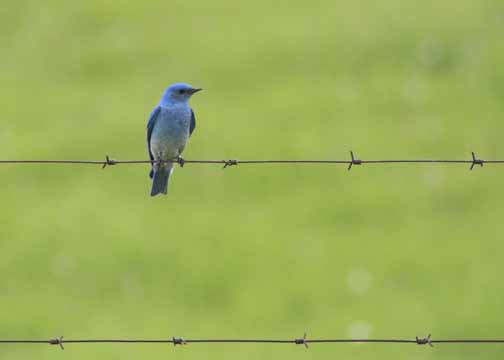


We were thrilled to actually see all of the bluebirds on the tour. Turns out the biologists who study the birds have a pretty good idea of their behavior, and therefore a high chance of successfully finding them. Yay science! After we’d had our fill of the bluebirds, we headed back to the farm and spent the rest of the afternoon exploring. We had lunch provided by The Peppered Elk food truck, found lots more birds and animals and checked out the information/gift shop. The staff were all friendly and knowledgeable. There is so much to do here. The grounds are gorgeous and one can just walk around for an entire day. A quick stop at the website will tell you about all of the fun activities for kids and adults; birding tours, photography workshops, bird banding demonstrations, birdhouse building, hummingbird planter workshops and kids camps.
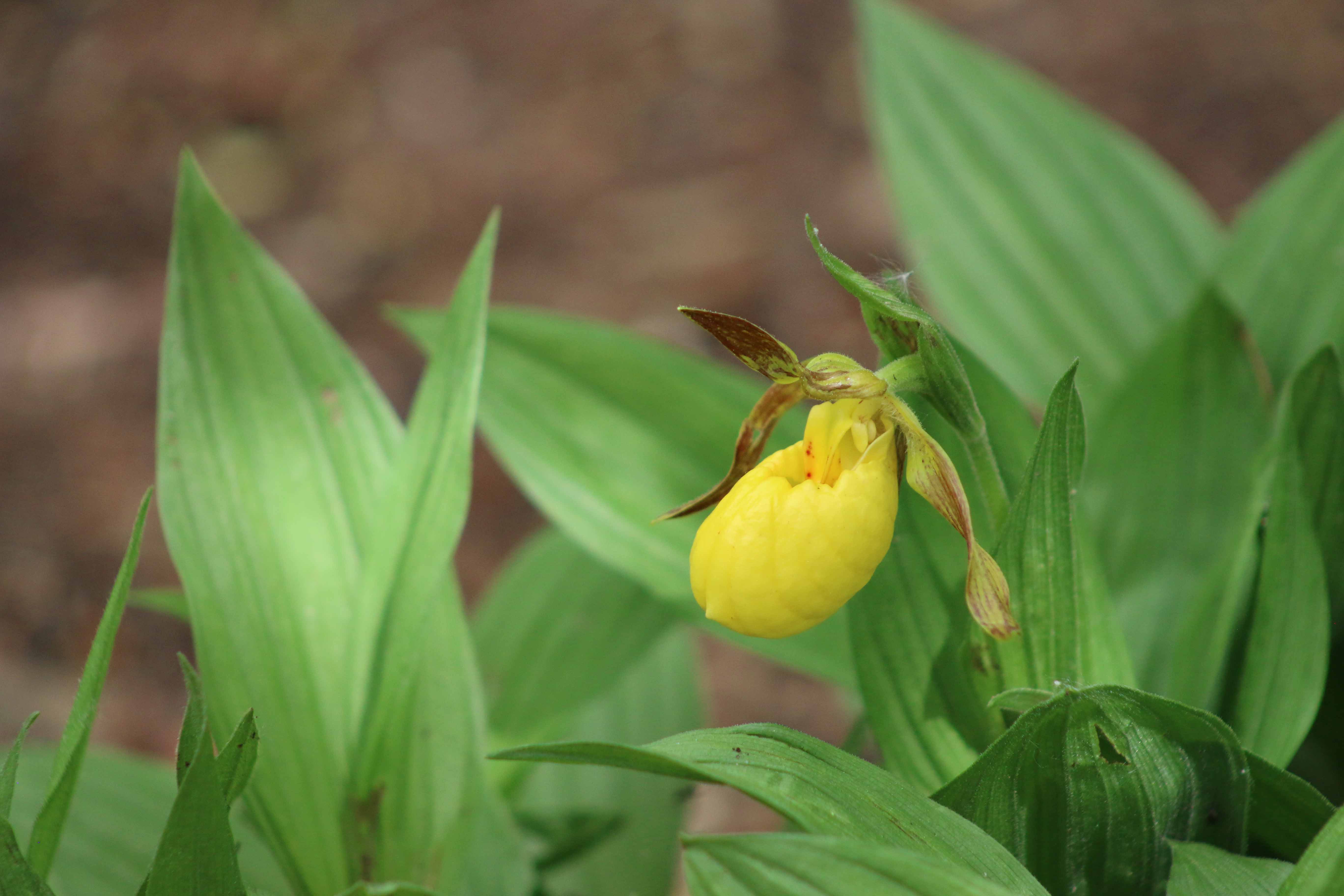


If you’re looking for a great day trip in Alberta, I can’t say enough great things about this farm. It’s fun and peaceful and a wonderful wildlife refuge. Make some plans to visit this gem. I certainly plan on a return visit.
Until next time, safe and happy travels either exploring your own back yard, or the world beyond.
L
Freezing in February
Posted on February 10, 2021
Once again, my busy day jobs have been keeping me separated from photography. I’m in health care and since COVID ramped up, I’ve been working so much. I’m behind on posting Thailand blogs (that trip was two years ago!) and lots of little day and weekend trips we were able to go on during the summer when COVID numbers were low in Alberta.

This past week, I did have a small bit of time and energy, and I decided to try frozen bubble photography!

The weather has been perfect for this little experiment; our daytime highs have been around -25° Celsius (-13 Fahrenheit) with a windchill as low as -40° C (-40 F). Most of the prairies (and the rest of Canada) has been locked in a polar vortex for nearly a week, so I had nothing better to do with my time. Frozen bubbles are just that- bubbles you blow up with a straw, like you used to do as a kid, blowing bubbles in your milk. The bubbles quickly begin to freeze and crystallize with beautiful, magical patterns. You can find recipes all over the internet and there are lots of “how-to” videos on YouTube. I used glycerin in mine rather than corn syrup, as that’s what I had available (and I wasn’t going to warm up the car and take a trip for supplies in this weather).

The bubbles are easy to make, especially if you watch a video for advice, and as long as the wind isn’t too strong. My only advice, is to have your equipment, supplies and camera settings all ready, so you don’t have to spend more time than needed outdoors in frigid weather to get your shot. I managed about 20 minutes before my hands were too cold and my bubble solution was getting watered down with ice buildup.


This is a great activity to try with kids, or even on your own. The bubbles are quite magical as they crust over with crystals and develop amazing patterns and striations. If you haven’t tried it, bundle up, get out there and give it a go – it’ll be spring before you know it!

Thanks for stopping by! Stay safe at home, until we can travel the world once more!
-L
Staycation Alberta: Chasing Comets
Posted on July 28, 2020
Comet Neowise surprised astronomers when it was discovered in March of this year. It became popular with the space community and lay people when in July, the comet came close enough to earth the be viewed with the naked eye, or at least a set of binoculars.

Astotin Lake, Elk Island National Park
I had trouble, between Edmonton’s recently very stormy skies, and my myriad of day jobs, finding a chance to head out to hunt for Neowise. Finally, last weekend, I had the time and was blessed with clear skies, so my husband entertained my insanity and we headed 45 minutes east of town to Elk Island National Park, our closest dark sky preserve. We arrived at the park just before midnight as the moon was setting. Even though I was late in the game in terms of catching the comet in its easy viewing phase last week, there were still lots of other folks out in the park that night; stargazers with telescopes far more impressive than mine, astrophotographers, and families enjoying the pleasant July evening.

Watching the setting moon at Astotin Lake in Elk Island National Park.
I’m a photographer, but astrophotography is a whole entity of its own. I follow a lot of communities: The Alberta Aurora Chasers and the Royal Astronomical Society of Canada, just to name a few. The photos from their members are always stunning, but I have ABSOLUTELY NO IDEA what they’re talking about when it comes to equipment and editing. In preparation for trying to capture Neowise on film, I just watched some YouTube videos about how to capture it on a DSLR. I set my camera to the suggested settings before we headed out so that I’d have an idea of where at least to begin so I’d have a chance.

A tiny red meteor streaking though the sky. Red means that the composition is nitrogen and oxygen.
Comet Neowise was no longer naked eye visible, so using all the internet’s suggestions of how to find it, we found a good viewing spot, and started searching with the binoculars. Eventually I found a “smudge”, and Shawn and I both agreed that that was most likely a less than impressive comet. I set up my camera, skeptical I’d even be able to computer it on film, since I couldn’t see it, but I was shocked when I looked at the camera’s screen to have a tiny green comet with a hazy tail appear.
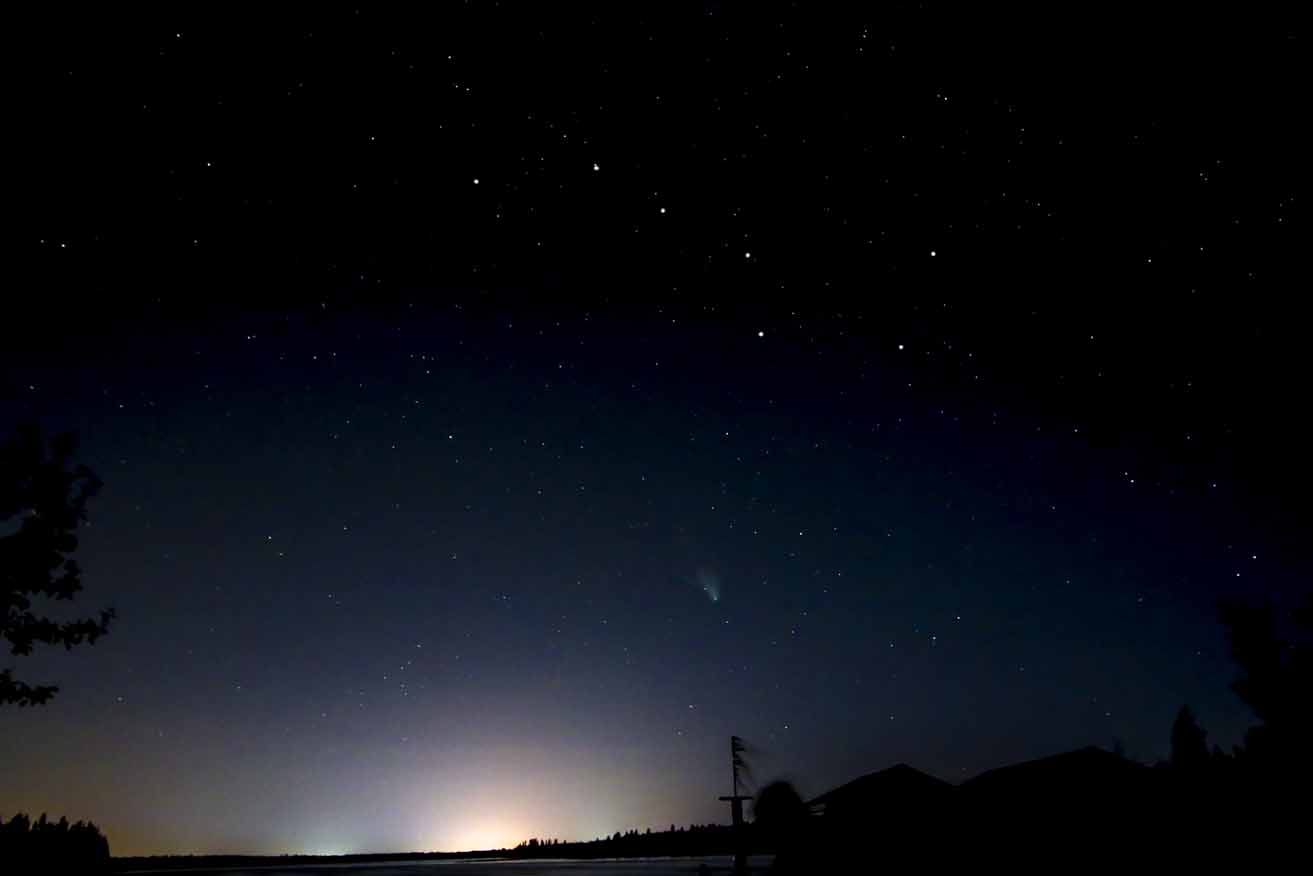
My first glimpse of the Neowise, just below the Big Dipper.

A fellow stargazer looking through a telescope.

Comet Neowise just below the big dipper.
While we were out that night, as it grew darker (the sun never fully goes to bed this far north in the summer time), I set up my telescope and we gazed at golden Saturn, massive Jupiter and its four Galilean moons, and the tiny, red dot, Mars. I don’t have photos of those, as my telescope tech is outdated and doesn’t hook up to my camera. Due to the dark sky preserve, I was able to view the two larger planets as crisply as I’d ever seen them in my telescope, with Saturn experiencing its first summer in 30 years, and faint white and red lines just visible on Jupiter. We watched meteors streak through the sky every few minutes (the Southern Delta Aquariids and the Alpha Capricornids peak July 28-29 and the Perseid meteor shower peaks August 11-13). Did you know you can tell what a meteor’s composition is based on it’s colours? I even got photos of the Milky Way; the edges of our own spiral galaxy. I just learned that between June and August, earth faces to the inside of the Milky Way galaxy, which provides better views from the denser centre.

Jupiter and Saturn with the Milky Way starting to appear on the right.

A yellow/greenish meteor in this photo of a star cluster in the milky way, possibly made of iron or magnesium.

Our very own galaxy, The Milky Way.

We left at 2:30 in the morning, a bit chilled, very tired, but really satisfied that we were able to see so much. Since we’re all stuck relatively close to home this summer, get out into a dark sky and check out the awesomeness of space. We really are a pale blue dot in a vast expanse. The magnitude is hard to comprehend but it sure is stunning.

Another meteor streaking through the sky above the Big Dipper and Neowise.

Did you get a chance to see Neowise? What other space events have you been able to witness or capture? Thanks for stopping by and feel free to comment or ask questions! Happy travels!
– Leslie
Photos © Eterno Dia Photography 2020. Please contact for reproduction.
 Eterno Dia Photography